Slide

Thoracic Outlet Syndrome

Slide

Thoracic Outlet Syndrome

Thoracic Outlet Syndrome

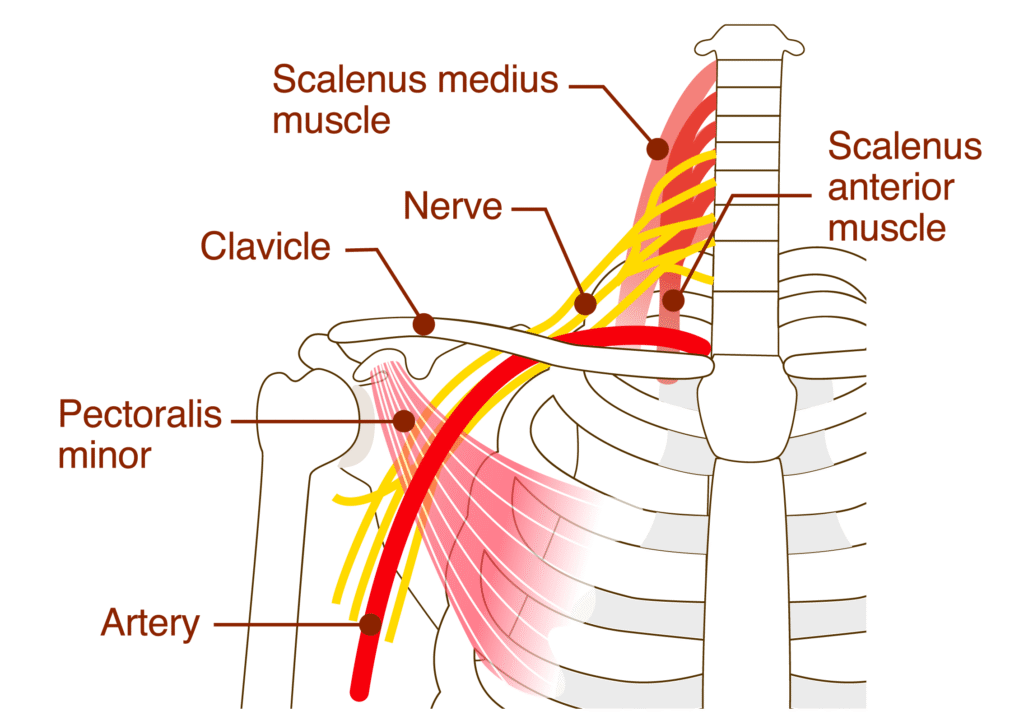
Thoracic Outlet Syndrome (TOS) is a condition that happens when nerves or blood vessels in the space between your collarbone and first rib (called the thoracic outlet) get squeezed or compressed. This can cause pain, numbness, or weakness in your shoulders, arms, and hands.
There are three main types of TOS:
  1. Neurogenic TOS – the most common type; it affects the nerves.
  2. Venous TOS – affects the veins and can cause swelling and bluish color in the arm.
  3. Arterial TOS – the rarest type; affects the arteries and can cause the hand to feel cold or pale.

Causes and Diagnosis of Neurogenic TOS (nTOS)

Neurogenic Thoracic Outlet Syndrome (nTOS) happens when the nerves in the brachial plexus — a group of nerves that control muscles and feeling in your shoulder, arm, and hand — get compressed or irritated. This compression usually occurs in the narrow space between the collarbone and the first rib, known as the thoracic outlet. One common cause is poor posture, like slouching or holding your shoulders forward, which can put extra pressure on the nerves. Repetitive movements, such as lifting your arms over your head for work or sports, can also lead to irritation or swelling that compresses the nerves over time.

Dr. Madi El-Haj discusses the difficulty of diagnosing nTOS

Another possible cause of nTOS is anatomical abnormalities, such as having an extra rib (called a cervical rib) or unusually tight muscles in the neck and shoulder area, especially the scalene or pectoralis minor muscles. These abnormalities can narrow the thoracic outlet and trap the nerves. Injuries, like from a car accident or a fall, may also trigger nTOS by damaging soft tissue and causing inflammation or scar tissue that presses on the nerves. In many cases, it’s a mix of factors — including posture, anatomy, and daily habits — that come together to cause neurogenic TOS.
Email list - carpal/cubital tunnel
First
Last

Sign up to be notified when new educational content is available!

Symptoms of nTOS

The symptoms of neurogenic thoracic outlet syndrome (nTOS) mostly affect the nerves in the shoulder, arm, and hand.

Common symptoms include:
  • pain in shoulder, upper arm, or even hand
  • numbness in some or all of the fingers
  • tingling in the neck, shoulder, arm, or fingers—especially the pinky and ring fingers.
  • some people also feel muscle weakness, making it harder to grip objects or do everyday tasks
  • a feeling of heaviness or tiredness in the arm after using it for a while, as well as muscle spasms or a dull ache in the neck and shoulder area.

These symptoms often get worse when you raise your arms, like when brushing your hair or reaching overhead.

Over time, if the nerve compression is not treated, it can lead to muscle wasting (atrophy) in the hand, especially at the base of the thumb. Because the symptoms can come and go or look like other conditions (like carpal tunnel syndrome), nTOS can sometimes be hard to diagnose without specific tests.

If you think you might have a nerve problem, use our directory to identify a nerve expert to contact. 

Treatment of nTOS

Dr. Madi El Haj discusses treatment of nTOS.

Treatment for neurogenic thoracic outlet syndrome (nTOS) usually starts with non-surgical options, especially physical or occupational therapy. A therapist will work on improving posture to relieve muscle tightness, strengthening of the shoulder girdle for improved support and stretching or soft tissue mobilization of any tight muscles in the arm. These exercises can relieve pressure on the nerves and reduce symptoms over time. Doctors may also recommend pain relievers, anti-inflammatory medications, or muscle relaxants to help manage discomfort while you go through therapy.

If symptoms don’t improve with therapy and medications, other options might be considered. These include nerve blocks or botox injections, which can help reduce muscle tightness and nerve irritation. In rare or severe cases where non-surgical treatments don’t work, surgery may be needed to remove the source of compression—like a tight muscle or an extra rib. However, surgery is usually the last resort after trying other treatments for several months.

Patient Journey – Sophia

Sophia has had a long road to diagnosis. She shares what she has learned through this process, how her peripheral nerve injury has impacted her life, and advice for others going through their own journey.

Thoracic Outlet Syndrome Webinar

Dr. Madi El-Haj and Dr. Robert Hagan presented on Thoracic Outlet Syndrome, its diagnostics, and potential treatments.

Click to visit our YouTube Channel for more webinars

PAGE CONTRIBUTORS

PAGE CONTRIBUTORS

Madi-El-Haj

Madi El-Haj, MD

Peripheral Nerve Surgeon
Hadassah Medical Center
Israel

Robert Hagan, MD

Plastic Surgeon
Neuropax Clinic
Missouri

Alta Fried, CHT

Occupational Therapist
ARMS Clinic
New Jersey

The content on or accessible through globalnervefoundation.org is for informational purposes only. This information is not a substitute for professional advice or expert medical services from a qualified healthcare provider

Thank you for visiting the Global Nerve Foundation! Please Click below to joining our mailing list to stay informed!