Nerves travel from the spinal cord in your neck, out through the shoulder, and all the way to the tips of your fingers. Along the way they control the movement of your arm and hand and carry sensation — the ability to feel touch, temperature, and pain.
Because these peripheral nerves travel such a long distance and have to squeeze through several tight spaces, there are many points where they can be compressed or injured. An injured nerve can cause chronic pain, tingling, numbness, weakness, or loss of feeling. Read below to learn more about the nerves of the arm and hand and how they can be damaged.
Carpal tunnel syndrome
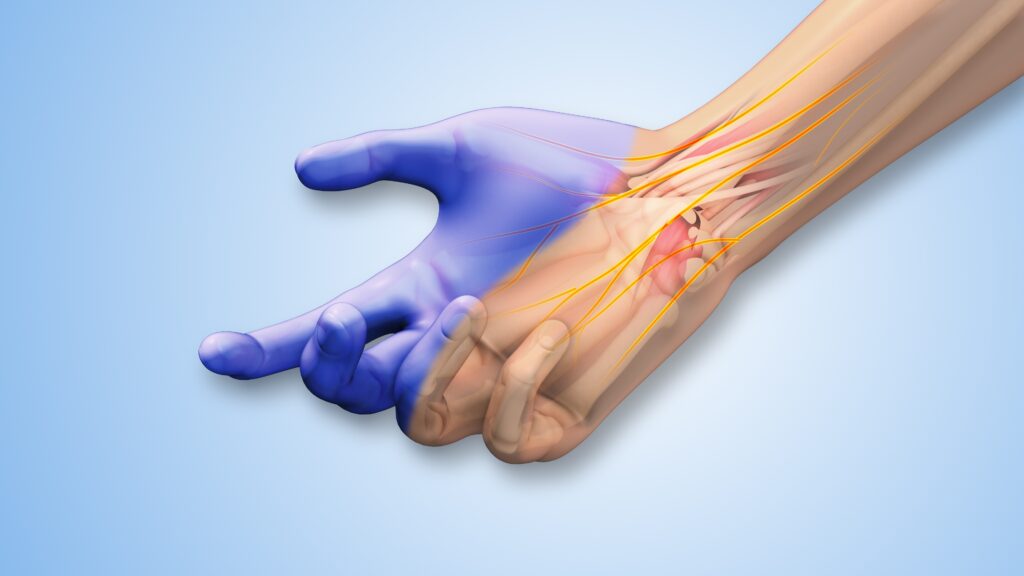
At the wrist, the median nerve travels through a tight passage called the carpal tunnel. When this nerve is compressed, it can cause numbness, tingling, and pain in the thumb, index, middle, and part of the ring finger — often worse at night — along with weakness or clumsiness of the hand. Carpal tunnel syndrome is the most common nerve compression problem.
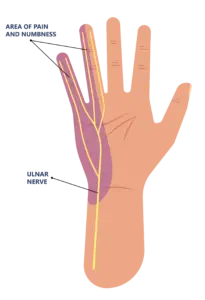
On the inside of your elbow, the ulnar nerve passes through a narrow channel called the cubital tunnel — the spot most people know as the “funny bone.” When the ulnar nerve is compressed here, it can cause numbness and tingling in the ring and little fingers, aching on the inside of the elbow, and a weakening grip. Cubital tunnel syndrome is the second most common nerve compression in the body.
The brachial plexus — the nerve network of the arm
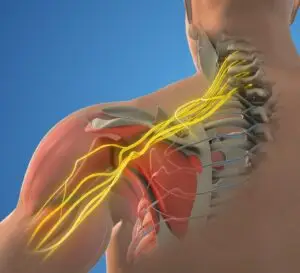
Every nerve in your arm begins at the brachial plexus, a network of nerves that starts at the spinal cord in your neck (levels C5 through T1) and branches through the shoulder to form the major nerves of the arm — including the median, ulnar, and radial nerves. A brachial plexus injury — from trauma, stretching, pressure, or compression — can affect movement and sensation across the entire arm and hand.
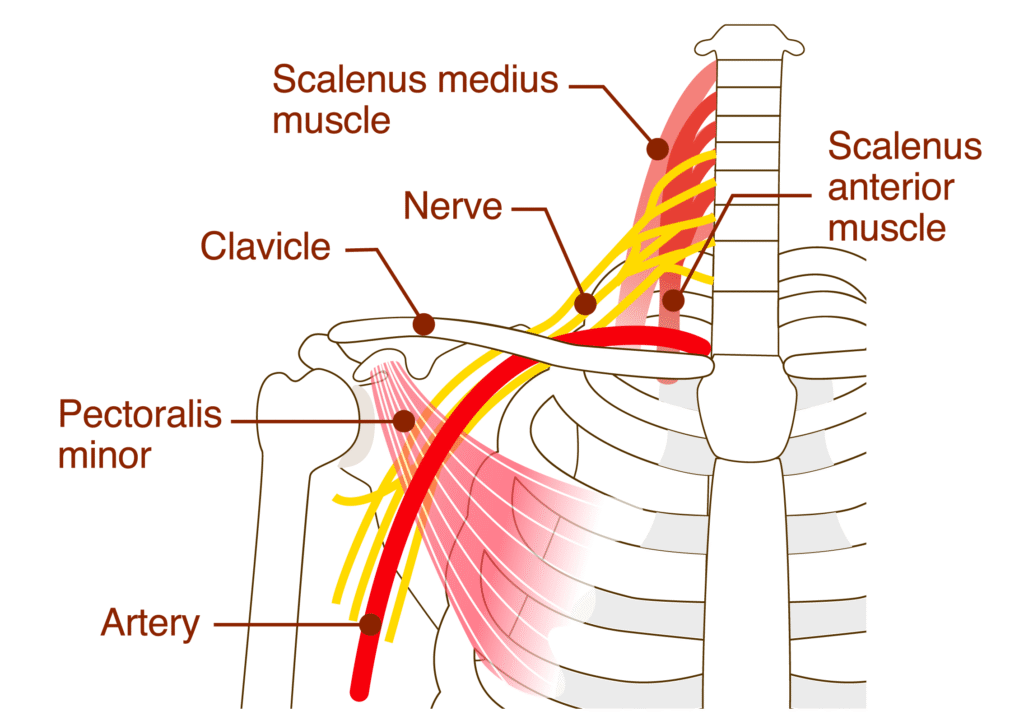
As the brachial plexus leaves the neck, it passes through a narrow space between your collarbone and first rib called the thoracic outlet. When the nerves — and sometimes the blood vessels — are compressed in this space, it can cause pain, numbness, tingling, or weakness in the neck, shoulder, arm, and hand. This is known as thoracic outlet syndrome, and symptoms often worsen when the arm is raised overhead.
The content on or accessible through globalnervefoundation.org is for informational purposes only. This information is not a substitute for professional advice or expert medical services from a qualified healthcare provider
We use cookies on our website to give you the most relevant experience by remembering your preferences and repeat visits. By clicking “Accept All”, you consent to the use of ALL the cookies. However, you may visit "Cookie Settings" to provide a controlled consent.
This website uses cookies to improve your experience while you navigate through the website. Out of these, the cookies that are categorized as necessary are stored on your browser as they are essential for the working of basic functionalities of the website. We also use third-party cookies that help us analyze and understand how you use this website. These cookies will be stored in your browser only with your consent. You also have the option to opt-out of these cookies. But opting out of some of these cookies may affect your browsing experience.
Necessary cookies are absolutely essential for the website to function properly. These cookies ensure basic functionalities and security features of the website, anonymously.
Cookie
Duration
Description
cookielawinfo-checkbox-analytics
11 months
This cookie is set by GDPR Cookie Consent plugin. The cookie is used to store the user consent for the cookies in the category "Analytics".
cookielawinfo-checkbox-functional
11 months
The cookie is set by GDPR cookie consent to record the user consent for the cookies in the category "Functional".
cookielawinfo-checkbox-necessary
11 months
This cookie is set by GDPR Cookie Consent plugin. The cookies is used to store the user consent for the cookies in the category "Necessary".
cookielawinfo-checkbox-others
11 months
This cookie is set by GDPR Cookie Consent plugin. The cookie is used to store the user consent for the cookies in the category "Other.
cookielawinfo-checkbox-performance
11 months
This cookie is set by GDPR Cookie Consent plugin. The cookie is used to store the user consent for the cookies in the category "Performance".
viewed_cookie_policy
11 months
The cookie is set by the GDPR Cookie Consent plugin and is used to store whether or not user has consented to the use of cookies. It does not store any personal data.
Thank you for visiting the Global Nerve Foundation! Please Click below to joining our mailing list to stay informed!