Slide

Patient Journeys

Slide

Patient Journeys

GET TO KNOW JORDAN

Jordan had a routine wisdom tooth extraction—but soon after, she noticed something wasn’t right. She developed numbness and a loss of taste following the procedure.

In sharing her story, Jordan reflects on what she’s learned along the way: how a peripheral nerve injury changed her day-to-day life, how she ultimately found the right care team, and the advice she would offer to others navigating their own nerve care journey.

POSSIBILITY OF LINGUAL NERVE INJURY

Millions of people have their wisdom teeth removed each year, but most don’t realize that important nerves in the mouth can be injured during the procedure.

Jordan sustained severe injury to the lingual nerve on both sides (classified as Grade IV–V).

Explore more about nerves in the head and neck.

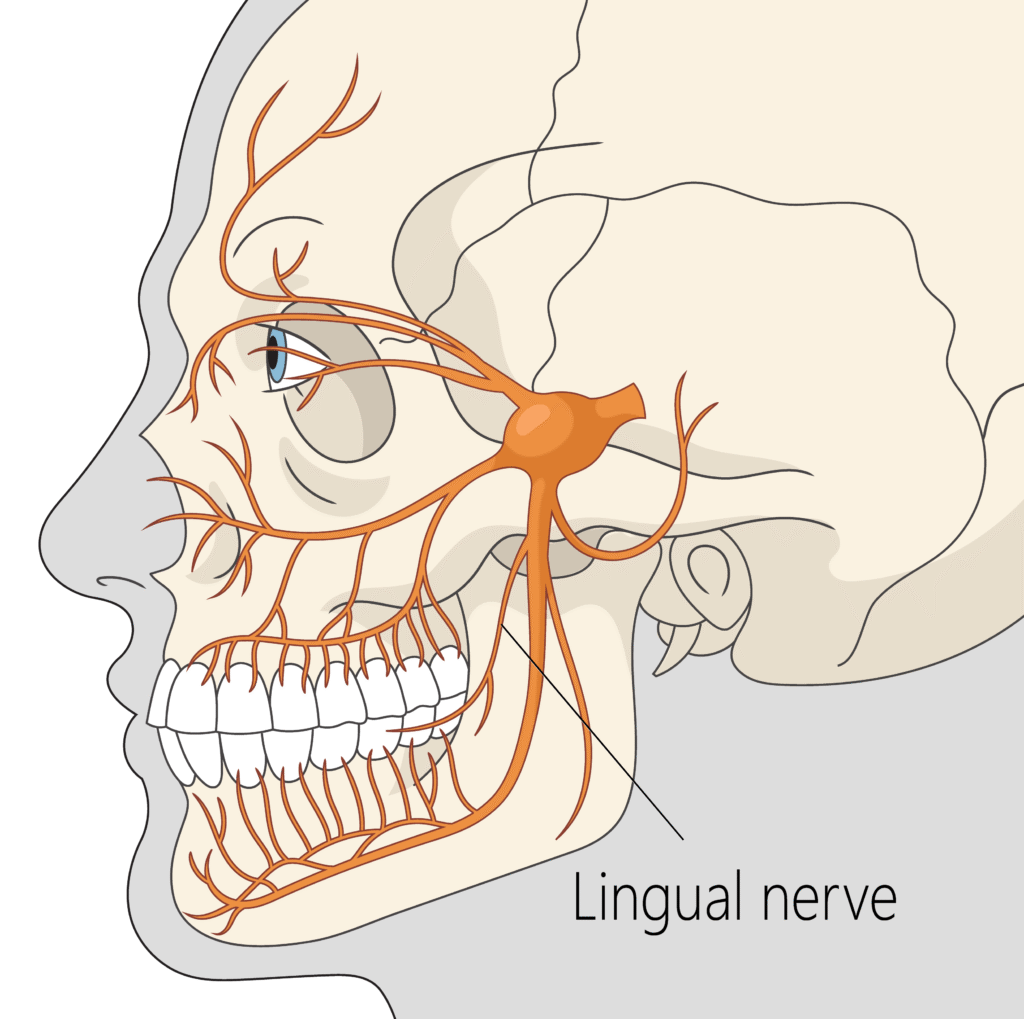
ABOUT THE LINGUAL NERVE

The lingual nerve is a branch of a larger facial nerve pathway that carries feeling (touch, pain, and temperature) from the front part of the tongue, the floor of the mouth, and the inside of the gums near the lower teeth. It also helps carry taste signals from the front of the tongue through connected nerve fibers. Because it runs close to the lower jaw and the back molar area, the lingual nerve can be affected by problems in the mouth, jaw, or dental area.

Injuries to the lingual nerve most often happen during dental procedures, especially removal of lower wisdom teeth, injections for local anesthesia (numbing shots), or other surgery near the back of the lower jaw. When the nerve is irritated or damaged, a person may notice numbness, tingling, burning, or reduced feeling** on one side of the tongue. Some people also notice **changes in taste** or pain when eating or brushing teeth. In many cases, symptoms improve over time as the nerve heals, but more serious injuries can lead to longer-lasting problems.
Other causes of lingual nerve injury include accidental bites (especially when the mouth is numb), cuts or trauma inside the mouth, and rarely **tumors or infections** that press on the nerve. If symptoms are severe, do not improve over several weeks, or make it hard to eat or speak, it’s important to tell a dentist, oral surgeon, or doctor. They can check for signs of nerve injury and suggest the next steps, which may include watchful waiting, pain management, or referral to a specialist.

RECOGNIZING A NERVE PROBLEM

Jordan knew something wasn’t right as soon as she woke up from surgery—she couldn’t feel her tongue. Instead of waiting, she sought additional information and care right away.

With many oral nerve injuries, patients experience temporary paresthesia, meaning sensation returns after a short period of time. In Jordan’s case, the numbness did not improve, indicating a more severe injury and ongoing (permanent) paresthesia. Acting quickly helped her connect with the right support sooner.
The Global Nerve Foundation (GNF) is working to make that connection easier for others through a directory of peripheral nerve specialists and a physician referral network—helping shorten time to diagnosis and improve outcomes.

Visit the GNF Directory

FINDING CARE

Many patients with suspected nerve injuries are told to “wait and see.” While observation can be appropriate in some cases, it must be balanced against the reality that delays in evaluation and treatment can lead to worse outcomes.

Jordan benefited from acting quickly. She traveled from Arizona to Texas for specialized care, and her revision surgery was performed within three months of her original procedure.

IMPACT ON LIFE

Peripheral nerve recovery can be long and challenging—especially when the injury affects the mouth and jaw. Jordan describes a demanding recovery that included having her jaw wired shut for an extended period of time.

Over the course of a year, she held on to small signs of progress. Jordan remembers the joy of feeling her tongue again for the first time—and being able to start communicating more comfortably.
Taste and communication are essential to everyday life. When the nerves that support these functions are injured, it can affect how we eat, speak, connect with others, and move through the world.

Jordan also reflects on the mental and emotional strain of recovery, and the step-by-step process of rebuilding sensation and regaining confidence in her ability to communicate.

Thank you for visiting the Global Nerve Foundation! Please Click below to joining our mailing list to stay informed!