Diabetic Neuropathy


Slide
Slide
Diabetic Neuropathy
Diabetic Neuropathy in the Legs
Diabetic neuropathy is nerve damage that can affect several parts of the body. There are different types, including autonomic neuropathy (affecting the heart, digestion, and bladder), proximal neuropathy (affecting the hips and thighs), and focal neuropathy (affecting a single nerve). The most common form is peripheral neuropathy, which affects the legs and feet — and that is the focus of this page. Peripheral neuropathy can lead to numbness, tingling, burning, or pain. Some people may notice only mild symptoms at first, while others may have serious pain or trouble walking. Understanding the causes, warning signs, and treatment options can help you protect your legs and feet.
Certain factors make diabetic neuropathy more likely. People who have had diabetes for many years are at higher risk, especially if their blood sugar has not been well controlled. Smoking or using tobacco products can further damage blood vessels and reduce blood flow to the legs. High blood pressure and high cholesterol can also strain the blood vessels. Being overweight and not getting enough physical activity can increase the chances of developing nerve damage as well.
Signs and Symptoms in the Legs
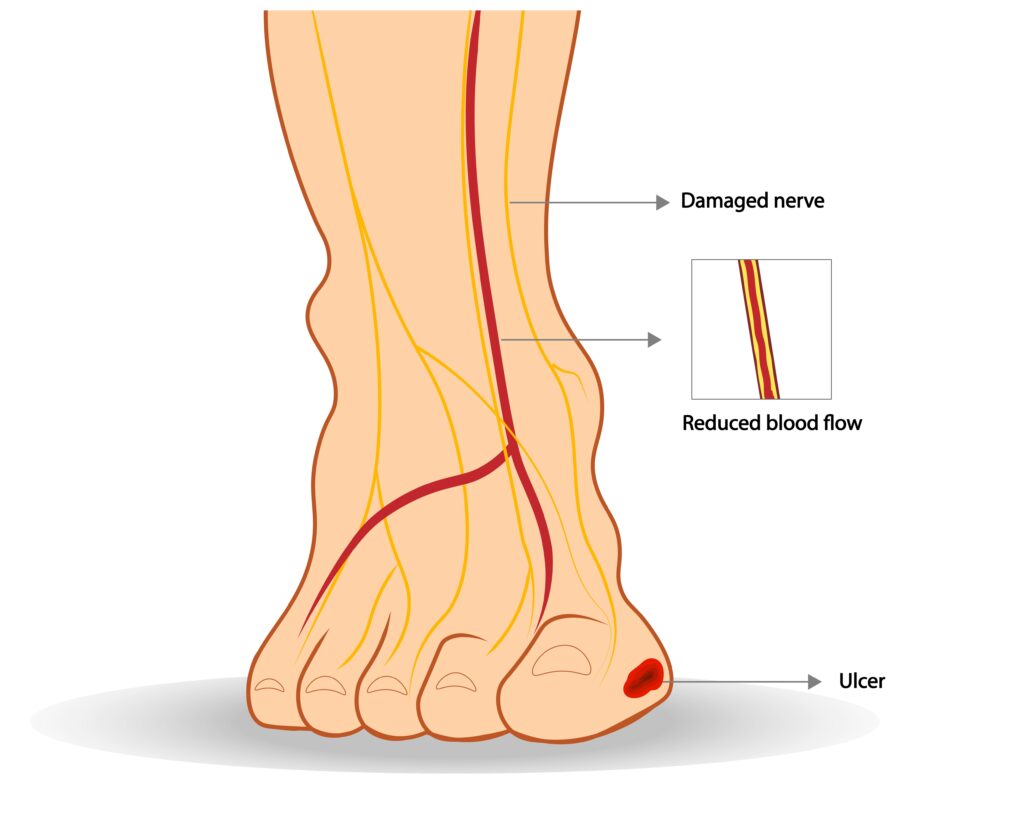
The symptoms of diabetic neuropathy usually develop slowly and often start in the toes and feet before moving up the legs. Many people first notice a loss of feeling. They may not feel light touch, pressure, or changes in temperature as well as they used to. For example, you might step on something sharp or hot and not realize it right away because the nerves are not sending normal pain signals.
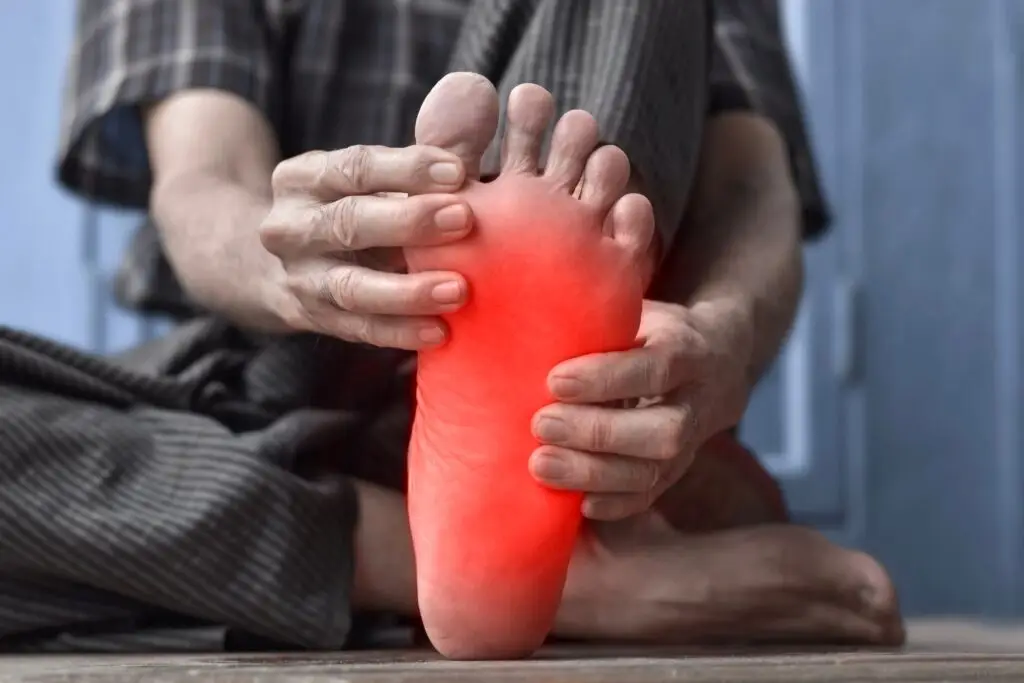
Other people feel uncomfortable sensations instead of numbness. They may have tingling, like “pins and needles,” or burning and stabbing pain in their feet or legs. Sometimes even a light touch, such as a bedsheet or a sock, can feel very painful. This is called increased sensitivity. The pain may be worse at night and can make it hard to sleep.
Other people feel uncomfortable sensations instead of numbness. They may have tingling, like “pins and needles,” or burning and stabbing pain in their feet or legs. Sometimes even a light touch, such as a bedsheet or a sock, can feel very painful. This is called increased sensitivity. The pain may be worse at night and can make it hard to sleep.
Diabetic neuropathy can also affect the muscles in the legs and feet. When the nerves that control muscles are damaged, you may notice weakness in your ankles or legs. This can make it harder to walk, climb stairs, or keep your balance. Some people feel unsteady when they stand or walk and may be more likely to trip or fall.
Because feeling is reduced, small injuries can go unnoticed. Tiny cuts, blisters, or pressure spots from shoes might not hurt, so a person might not realize they are there. Over time, these small problems can turn into serious infections or open sores called ulcers, especially on the feet.
If you notice any of these symptoms, talk to your healthcare provider promptly — early evaluation is key to protecting your nerves and preventing complications.
Because feeling is reduced, small injuries can go unnoticed. Tiny cuts, blisters, or pressure spots from shoes might not hurt, so a person might not realize they are there. Over time, these small problems can turn into serious infections or open sores called ulcers, especially on the feet.
If you notice any of these symptoms, talk to your healthcare provider promptly — early evaluation is key to protecting your nerves and preventing complications.
Diagnosis of Diabetic Neuropathy
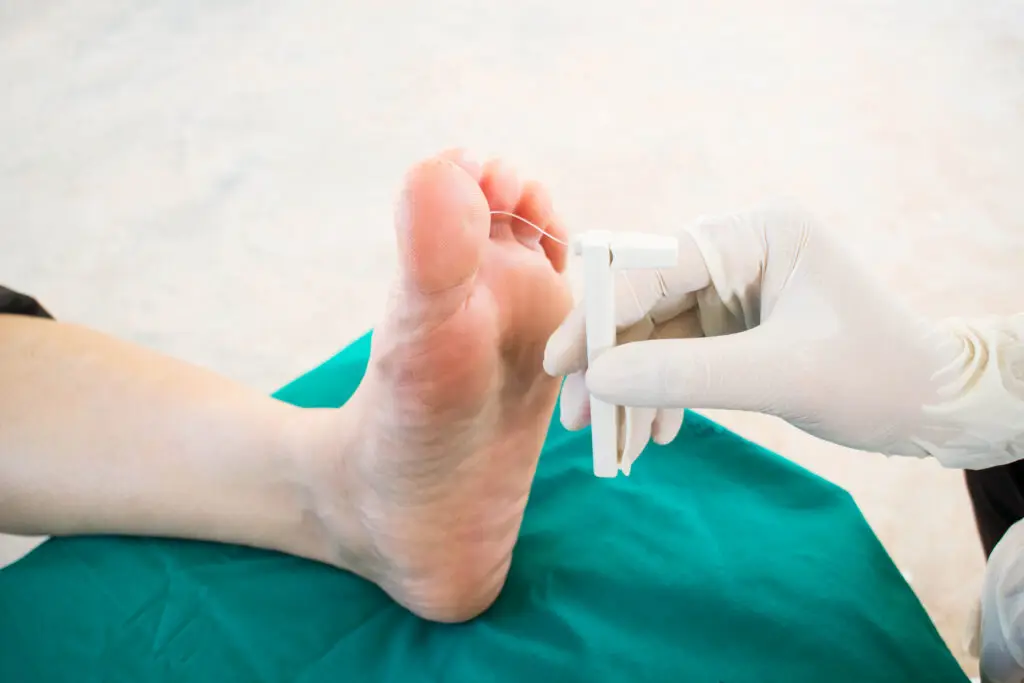
Diagnosing diabetic neuropathy usually begins with a conversation and a physical exam. Your doctor will ask about your symptoms — when they started, what they feel like, and whether they have been getting better or worse. They will also review your history of diabetes and how well your blood sugar has been controlled over time. During the exam, the doctor will test how well your legs and feet respond to different sensations. A common test uses a soft filament, similar to a thin piece of nylon, pressed gently against the skin of your foot to check whether you can feel light touch. Your doctor may also use a small vibrating tool or a blunt pin to test your sensitivity to vibration and pressure, and may check your ankle reflexes.
If more information is needed, your doctor may order additional tests to better understand the extent of nerve damage. A nerve conduction study measures how quickly electrical signals travel through the nerves in your legs and feet. Electrodes are placed on the skin and a mild electrical signal is sent through the nerve — this is generally well tolerated and takes about 30 to 60 minutes. In some cases, a skin punch biopsy may be performed, in which a tiny sample of skin is taken from the leg or foot to count the small nerve fibers just beneath the surface. A reduced number of these fibers is a sign of nerve damage.
Blood tests are also commonly ordered as part of the diagnostic process. These help rule out other causes of nerve damage — such as vitamin deficiencies, thyroid problems, or other conditions — that can cause symptoms similar to diabetic neuropathy. Your doctor may also check your HbA1c level, which reflects your average blood sugar over the past two to three months. Getting the right diagnosis is an important first step, because some causes of neuropathy are treatable on their own, and knowing the cause helps your care team choose the best plan for you.
Blood tests are also commonly ordered as part of the diagnostic process. These help rule out other causes of nerve damage — such as vitamin deficiencies, thyroid problems, or other conditions — that can cause symptoms similar to diabetic neuropathy. Your doctor may also check your HbA1c level, which reflects your average blood sugar over the past two to three months. Getting the right diagnosis is an important first step, because some causes of neuropathy are treatable on their own, and knowing the cause helps your care team choose the best plan for you.
Why Early Treatment Matters
Treating diabetic neuropathy early is very important. If nerve damage continues, it can lead to serious complications. One major problem is foot infections. Since a person with neuropathy may not feel pain, an injury might not be cleaned or treated in time. This can allow germs to enter and cause infection.
These infections can be difficult to treat, especially if blood flow to the feet is poor. Ulcers may form that do not heal easily. In some cases, bones and joints in the feet can change shape because of long-term nerve damage and stress on the foot. Some patients develop a serious condition called Charcot foot (Charcot neuroarthropathy), where bones and joints in the foot collapse and deform over time. In very severe situations, when infections cannot be controlled or blood flow is extremely limited, surgery may be needed. In the worst cases, part of the foot or leg may need to be removed (amputation) to protect the person’s overall health.
These infections can be difficult to treat, especially if blood flow to the feet is poor. Ulcers may form that do not heal easily. In some cases, bones and joints in the feet can change shape because of long-term nerve damage and stress on the foot. Some patients develop a serious condition called Charcot foot (Charcot neuroarthropathy), where bones and joints in the foot collapse and deform over time. In very severe situations, when infections cannot be controlled or blood flow is extremely limited, surgery may be needed. In the worst cases, part of the foot or leg may need to be removed (amputation) to protect the person’s overall health.
The good news is that early diagnosis and proper care can help slow down nerve damage and lower the risk of serious problems. Seeing a healthcare provider when symptoms first appear gives you a better chance of protecting your legs and feet.
Treatment Options
There is no simple cure for diabetic neuropathy, but there are many ways to manage it. Treatment usually focuses on controlling blood sugar, easing pain, and preventing further damage and complications.
Blood Sugar Control
Keeping blood sugar in a healthy range is the most important step in treating diabetic neuropathy. When blood sugar is well controlled, it can prevent more nerve damage and may even improve some symptoms over time. This often involves a combination of strategies.
Many people take diabetes medications or insulin to help lower their blood sugar. Following a meal plan that focuses on balanced nutrition, including whole grains, lean proteins, vegetables, and limited sugary foods, is also key. Regular physical activity, such as walking, swimming, or biking, helps the body use sugar more effectively. Checking blood sugar as recommended by a healthcare provider helps a person know when their levels are too high or too low and adjust their care plan as needed.
Many people take diabetes medications or insulin to help lower their blood sugar. Following a meal plan that focuses on balanced nutrition, including whole grains, lean proteins, vegetables, and limited sugary foods, is also key. Regular physical activity, such as walking, swimming, or biking, helps the body use sugar more effectively. Checking blood sugar as recommended by a healthcare provider helps a person know when their levels are too high or too low and adjust their care plan as needed.
Medications for Nerve Pain
Even when blood sugar is under good control, nerve pain can still be a problem. To help with this, healthcare providers may prescribe medicines such as anticonvulsants, SNRIs, and tricyclics that are commonly used to treat nerve pain. Some of these medicines were first made for other conditions, like seizures or depression, but at lower doses they can help change the way the body feels pain.
These medications do not fix the damaged nerves, but they can reduce pain, burning, or tingling, making it easier to sleep and carry out daily activities. In some cases, topical treatments such as creams, gels, or patches can be applied directly to painful areas of the skin. The choice of medicine depends on the person’s overall health, other medications they take, and how they respond to treatment.
These medications do not fix the damaged nerves, but they can reduce pain, burning, or tingling, making it easier to sleep and carry out daily activities. In some cases, topical treatments such as creams, gels, or patches can be applied directly to painful areas of the skin. The choice of medicine depends on the person’s overall health, other medications they take, and how they respond to treatment.
Foot and Leg Care
Daily care of the legs and feet is extremely important for anyone with diabetic neuropathy. Because feeling may be reduced, checking the feet every day helps catch problems early. This includes looking for cuts, blisters, redness, swelling, or areas where the skin is rubbed or broken. A mirror can help you see the bottoms of your feet, or you can ask someone you trust to help.
Feet should be washed every day with warm (not hot) water and gently dried, especially between the toes. Moisturizer can be used on dry skin to prevent cracking, but it should not be put between the toes, where extra moisture can cause infections. Toenails should be trimmed straight across to avoid ingrown nails. Some people may need a podiatrist, or foot doctor, to trim their nails and treat calluses or other foot problems safely. Wearing clean, dry socks and well-fitting shoes at all times protects the feet from injury. Shoes should not be too tight or too loose, and they should be checked for rocks or objects inside before putting them on. Walking barefoot, even indoors, is not recommended because you may step on something sharp without realizing it. Regular checkups with a podiatrist and healthcare provider give you a chance to catch small problems before they become serious.
Feet should be washed every day with warm (not hot) water and gently dried, especially between the toes. Moisturizer can be used on dry skin to prevent cracking, but it should not be put between the toes, where extra moisture can cause infections. Toenails should be trimmed straight across to avoid ingrown nails. Some people may need a podiatrist, or foot doctor, to trim their nails and treat calluses or other foot problems safely. Wearing clean, dry socks and well-fitting shoes at all times protects the feet from injury. Shoes should not be too tight or too loose, and they should be checked for rocks or objects inside before putting them on. Walking barefoot, even indoors, is not recommended because you may step on something sharp without realizing it. Regular checkups with a podiatrist and healthcare provider give you a chance to catch small problems before they become serious.
Lifestyle Changes
Healthy lifestyle choices support your nerves, blood vessels, and overall health. Quitting smoking is one of the most important changes a person with diabetic neuropathy can make. Smoking damages blood vessels and reduces blood flow, which can make nerve problems worse. Healthcare providers can offer programs, medications, or counseling to help people stop smoking.
Staying physically active, as approved by your provider, helps improve circulation and can make it easier to control blood sugar, blood pressure, and weight. Even simple activities like walking or light stretching can be helpful. Maintaining a healthy weight reduces pressure on the feet and improves overall health. Managing blood pressure and cholesterol through diet, exercise, and medicine when needed helps protect the blood vessels that supply the nerves. These steps not only help with neuropathy but also lower the risk of heart disease and stroke.
Staying physically active, as approved by your provider, helps improve circulation and can make it easier to control blood sugar, blood pressure, and weight. Even simple activities like walking or light stretching can be helpful. Maintaining a healthy weight reduces pressure on the feet and improves overall health. Managing blood pressure and cholesterol through diet, exercise, and medicine when needed helps protect the blood vessels that supply the nerves. These steps not only help with neuropathy but also lower the risk of heart disease and stroke.
Peripheral Nerve Decompression
Visit our Peripheral Nerve Decompression Page to learn more about this procedure.
Decompression in Diabetic Neuropathy
For some people with diabetic neuropathy, nerve pain and numbness are made worse by a nerve being physically compressed or trapped at a specific point in the leg or foot — on top of the damage already caused by diabetes. In these cases, a surgical procedure called peripheral nerve decompression may help. A surgeon carefully releases the tight tissue pressing on the nerve, giving it more room to function. This will not reverse the underlying nerve damage from diabetes, but for the right candidate it may reduce pain, improve sensation, and lower the risk of complications like foot ulcers.
Not everyone with diabetic neuropathy is a candidate for this procedure. A nerve specialist can evaluate whether compression is contributing to your symptoms and whether surgery is appropriate for you.
Not everyone with diabetic neuropathy is a candidate for this procedure. A nerve specialist can evaluate whether compression is contributing to your symptoms and whether surgery is appropriate for you.
Visit our Peripheral Nerve Decompression Page to learn more about what to expect, who may benefit, and how to find a qualified surgeon.
If you are suffering from compression symptoms, be sure to consult a nerve specialist

PAGE CONTRIBUTORS
PAGE CONTRIBUTORS

Lee Dellon, MD
Peripheral Nerve Surgeon

Sofija Pejkova, MD
Plastic and Reconstructive Surgeon
University Clinic for Plastic and Reconstructive Surgery

Sofija Tusheva, MD
Plastic and Reconstructive Surgeon
The content on or accessible through globalnervefoundation.org is for informational purposes only. This information is not a substitute for professional advice or expert medical services from a qualified healthcare provider